


Case Study: Top Service ‘trading experiences’ protecting members from hundreds of thousands of pounds in bad debt
Trading experiences, available exclusively through Top Service, are instrumental in protecting its membership of UK based construction companies from crippling bad debt.
In the following case study we will highlight a particular example where trading experiences saved one of our members hundreds of thousands of pounds. The submissions of information from members led to Top Service removing the credit limit for a contractor that was heading for liquidation, while standard credit reports from other credit reference agencies continued to suggest a safe credit limit of £10,000.
Firstly, we will summarise the trading experiences service.
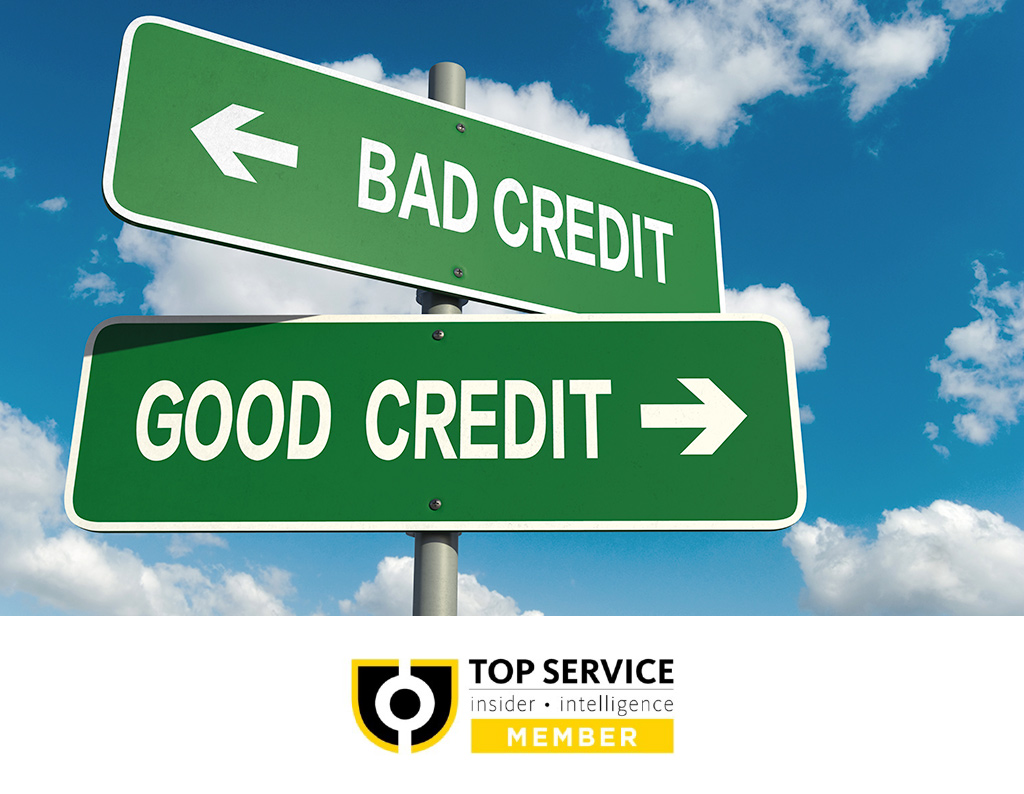
What is Top Service’s trading experiences service?
Top Service is the only credit reference agency in the UK exclusively for the construction sector. The trading experiences scheme from Top Service has over 3000 construction industry members.
The members share their trading experiences through the community, telling us who they’re working with and whether they are being paid on time, late or not at all. By having access to these trading experiences, our members are able to make better and more informed decisions about extending credit facilities to a new customer. Our trading experiences allow members to have a better idea of what to expect; are they likely to be paid on time, late or have to look at third party action for collection?
Case study – Global Site Services
Global Site Services was a skip hire company that became insolvent in July 2022. Their most recent accounts were filed on 30th September 2020, leaving a period of 22 months without updated credit information. On the surface, the company appeared creditworthy; there were no warning signs in a standard credit report.
The information submitted by Top Service trading experiences members told a very different story. The volume and severity of the trading experiences, and proactive investigations by our debt recovery team, resulted in us removing the suggested credit limit in 2020, over two years prior to the liquidation of the company.
We sent early warning notifications to our members to deal with this company with extreme caution while other credit reference agencies were still recommending £10,000 + credit, even in the days before liquidation. We know that trading experiences saved our members hundreds of thousands of pounds.

Client testimonial from Brianplant (Humberside) Ltd, illustrating how trading experiences helped them to avoid bad debt in their dealings with Global Site Services
Global Site Services approached Brianplant Ltd for tens of thousands of pounds over several years, and each time they were rejected due to Top Service trading experiences. Jane Kyme, Office Manager, said, “If it wasn’t for the trading experiences, based on a standard credit report we may well have opened the account and lost a serious amount of money”.
Jane explained that just looking at standard credit information and using trade references supplied by the applicant, simply isn’t enough. An applicant is always going to provide trade references for businesses they pay on time, probably purely for the reason of using them for that purpose. Jane said that almost all of their credit decisions are made using our trading experiences, because they are the truth, the real way that an applicant trades with other people.
Of Global Site Services, Emma Reilly, Managing Director of Top Service, said, “We had numerous requests to review our credit limit in light of the large credit limits that other agencies were suggesting, however, through our trading experiences we were aware of information that wasn’t available to the other agencies so we maintained our position. This position saved our members thousands of pounds, as shortly after the company went into liquidation.”
Contact Top Service for more information about being part of the trading experiences community.
National Insolvency Report: Monthly Statistics October 2022
National Insolvency figures published (14 October 2022) by the Government’s Insolvency Service have indicated that the number of registered company insolvencies in September 2022 was 1,679:
- 16% higher than in the same month in the previous year (1,453 in September 2021), and
- 11% higher than the number registered three years previously (pre-pandemic; 1,508 in September 2019).
In September 2022 there were 1,379 Creditors’ Voluntary Liquidations (CVLs), 4% higher than in September 2021 and 25% higher than September 2019.
Numbers for other types of company insolvencies, such as compulsory liquidations, remained lower than before the coronavirus (COVID-19) pandemic, although there were over 6 times as many compulsory liquidations in September 2022 compared to September 2021.
What makes Top Service Different?
When mainstream agencies look at credit information they number crunch. They use the last set of accounts and any public record information to produce credit limits and scores. It’s a pretty good way to look at credit information but it can overlook information that a person notices, for instance: What has happened from the time the business filed its last set of accounts to the time the credit check is performed?
Top Service Insider Intelligence is construction-specific information that provides up to date, relevant, reliable information to enable more informed business decisions to be made when accepting an application for trade credit.
As the only credit reference and debt recovery agency specific to the construction industry, we make it our mission to ensure our members receive the most up to date, credit information and company trading experiences. Our insider intelligence can make a real difference between company profit and painful write-offs.
What you need to know about Top Service:
- Our bespoke collection strategies mean that no case is treated the same. Our access to credit information and exclusive trading experiences enables us to change strategy quickly when our incoming intelligence is received, providing excellent results.
- Fast, effective collections. We know that speed is of the essence, so all collections are given top priority. We don’t just go through the motions, our experienced and highly skilled team members are adept at tricky negotiations, dispute resolution, tracing absconded debtors and thinking outside of the box to achieve tangible results.
- Fully compliant. We have been trading for 30 years and we have always taken compliance very seriously. We are authorised by the FCA and Top Service Ltd is a corporate member of the Credit Services Association (CSA). All senior Top Service staff are members of the Chartered Institute of Credit Management and collections professionals are hand-picked and trained to the highest standards.
- We have more than 30 years of experience in collecting commercial and contract debts.
Contact our helpdesk team today on 01527 518800 to discuss how Top Service can support and help you protect your business.
Fast Track Claims
 Written by Zahida Shah, Trainee Solicitor at Silverback Law
Following our previous article on the Small Claims Track, this month we will be talking about matters that are allocated to the Fast Track, and what this means.
What is Fast Track?
When a claim is brought at court, and a Defence is received, the court will allocate it to one of three ‘tracks’ which will determine how that case will be handled:
- Small Claims Track
- Fast Track
- Multi Track
In most instances, matters are allocated to the Fast Track if they are straightforward and of a value between £10,000 – £25,000.
What is the Procedure?
Fast Track Claims can take around 12 months from issue to get to a trial at Court.
It is worth noting that a Claim could settle, or the action be discontinued before it ever gets to trial. As with all Defended Litigation, parties are encouraged to liaise with each other, with a view to settle the matters at any time during proceedings.
Proceedings would generally involve a series of steps (all of which would be led and managed by your appointed legal representative):
- Pre-Action
- The Claimant is obligated to follow any relevant Pre-Action Protocols before issuing a Claim. This is also a very useful opportunity to learn of the Opposition’s disputes and to narrow down the issues so that the Claimant can assess the strength of their own Claim, even at this early stage.
- Statement of Case
- Issue Claim – The Claimant will need to issue a concise statement of the nature of the claim and specify the remedies which it seeks. It is often useful to also provide separate, detailed Particulars of Claim.
- Response to Claim Received – If the Defendant is unable to file a Defence within 14 days after the service of the Claim, they will need to send an Acknowledgement of Service. They will then have a further 14 days to file their Defence.
- Notice of Defence Received – the Court will send the Claimant the Notice of Defence which also provides a deadline by which the Claimant should confirm if they wish to continue with proceedings. This is known as a Notice of Intention to Proceed (NIP). This is another opportunity to re-evaluate and consider the risks and costs implications of continuing to trial.
NOTE: If the Claimant does not provide a NIP, the Court would actually Stay the Claim (pause indefinitely). The Claimant would then need to make an Application to lift the Stay, incurring a Court Fee and the legal costs of preparing such an Application.
- Assess for Strike Out of Defence – If there is no evidence of reasonable grounds for a Defence, the matter may be suitable for Strike Out.
To avoid all parties incurring unnecessary costs, the Claimant should make such an Application as early as possible.
- Directions
- Complete Directions Questionnaire -The Court will ask for the return of a Directions Questionnaire to establish information such as:
- whether you have requested a Stay to try and settle the matter
- if you intend to instruct an expert
- who your witnesses are
- what are their dates of unavailability (as any witness providing a statement will most likely need to attend the trial in person)
This will help the Court determine whether the provisional allocation to the Fast Track is correct.
- Complete Draft Order for Directions – The Claimant will also be asked to complete a Draft Order to try and establish the following:
- how long a trial should be listed for
- how long you think you will need to prepare your case for trial including collating Witness Statements
- if you will need expert evidence and the type of expert
- how long a trial should be listed for
The Court will ultimately issue directions/deadlines based on the needs of the case, and these must be adhered to.
NOTE: It is essential to complete the Directions Questionnaire, or you risk having the case struck out by the Court.
- Allocation
- Notice of Allocation to the Fast Track Received – The Court will usually provide further directions within the Notice of Allocation, setting down deadlines for disclosure of documents to the other party and exchange of Witness Statements.
- Payment of Trial Fee – The Court will also provide a deadline to pay the non-refundable Trial Fee, which is currently set at £545.00 for Fast Track trials.
- Disclosure
5.1 Disclosure of all documents that have a bearing on the case – You must actively search for, and disclose, all relevant documents that you now have, have had, or have access to if held by someone else.
This includes anything relevant, even if they are harmful to your own case as much as those that are helpful.
Documents can take many forms including images, emails and mobile phone texts.
- Exchange of Witness Statements
- A Witness Statement is a formal document that contains a Witness’s account of the facts relating to a particular dispute.
The purpose of a Witness Statement is to provide written evidence to support a particular party’s case. Should the matter go to trial, a Witness Statement is the evidence in chief for that individual and you may be cross examined on the content of it.
- Trial Preparation
- Prepare a Brief to Counsel – In addition to the witnesses, it is likely you will appoint Counsel to appear at trial on your behalf. They will serve a summary of the case which will also include all the documents and information required to put forward.
- Prepare the Trial Bundle – You usually prepare one Trial Bundle which includes notices and orders the court has sent out, the parties’ statement of cases, witness statements and any other relevant correspondence and documents. Parties need to try and agree the content in advance.
- Send a Costs Summary – Parties will need to prepare their own Costs Summary, so the Court has a clear breakdown of your costs in litigation, including any disbursements. This will be a considered document when awarding costs.
- The Trial
A Fast Track Trial is likely to last a day and is usually conducted in person.
Please refer to our previous article ‘The Small Claims Track’ which provides further information in respect of what to expect at trial.
You may be surprised to know that many Claims settle with trials looming round the corner and Settlement Orders being put before Judges at the trial hearing!
Should you consider a Settlement?
Unlike in the Small Claims Track, should a Claimant discontinue on a Fast Track case, they run the risk of the Defendant seeking the costs incurred defending the matter.
As such, the safest option is to agree with the Defendant to what is known as a Drop-Hands Settlement Offer. This is an offer whereby parties mutually agree to withdraw their claim with each party bearing its own costs. Such an Offer needs to be carefully drafted, particularly if it is being put forward by the Claimant.
Can you recover your Costs?
At trial, the general costs rule is that the winning party will usually be awarded its legal costs. However, in reality, recovery tends to be in the region of 60-70%.
As with any matter, the cost of bringing a Fast Track Claim all the way to trial could exceed the sums being sought for damages, negating your overall recovery. Your lawyer ought to provide the best information possible in respect of anticipated costs, how they will be calculated and your likelihood of being successful.
Costs of litigation can vary depending on many factors including how reasonable the opposition is and how many steps the parties go through before the matter is resolved. It is sensible to talk about a budget with your solicitor, who can then keep this under review at the various stages of the proceedings and warn you when costs are exceeding expectations.
Your lawyer should also be able to advise you as to potential next steps which will allow you to make a well-informed decision about what to do next.
Summary
It is often the case that the parties have exhausted all the Pre-Action Protocols and the only way forward is to issue proceedings and to go through litigation. However, all parties need to consider the overriding objectives and proportionality, as well as being commercially minded about bringing a claim.
Most Fast Track matters do not go all the way to trial because parties decide to settle, having taken into consideration the issues, risks and costs involved in continuing litigation.
An experienced and commercially minded lawyer can make all the difference in a Fast Track matter. There will always be litigation risk, but a good lawyer should advise you on the best strategy to mitigate such risk, whist being mindful of costs and the likely prospects of your claim, to help you achieve the best outcome.
For further advice on commercial litigation matters, please contact Vishal Mahay, Head of Commercial Litigation at Silverback Law on vishal.mahay@silverbacklaw.co.uk
National Insolvency Report: Monthly Statistics September 2022
National Insolvency figures published (16 August 2022) by the Government’s Insolvency Service have indicated that the number of registered company insolvencies in August 2022 was 1,933:
- 43% higher than in the same month in the previous year (1,348 in August 2021), and
- 42% higher than the number registered three years previously (pre-pandemic; 1,365 in August 2019).
In August 2022 there were 1,662 Creditors’ Voluntary Liquidations (CVLs), 33% higher than in August 2021 and 73% higher than August 2019.
Numbers for other types of company insolvencies, such as compulsory liquidations, remained lower than before the coronavirus (COVID-19) pandemic, although there were almost four times as many compulsory liquidations in August 2022 as in August 2021, and the number of administrations was more than twice as high as a year ago.
What makes Top Service Different?
When mainstream agencies look at credit information they number crunch. They use the last set of accounts and any public record information to produce credit limits and scores. It’s a pretty good way to look at credit information but it can overlook information that a person notices, for instance: What has happened from the time the business filed its last set of accounts to the time the credit check is performed?
Top Service Insider Intelligence is construction-specific information that provides up to date, relevant, reliable information to enable more informed business decisions to be made when accepting an application for trade credit.
As the only credit reference and debt recovery agency specific to the construction industry, we make it our mission to ensure our members receive the most up to date, credit information and company trading experiences. Our insider intelligence can make a real difference between company profit and painful write-offs.
What you need to know about Top Service:
- Our bespoke collection strategies mean that no case is treated the same. Our access to credit information and exclusive trading experiences enables us to change strategy quickly when our incoming intelligence is received, providing excellent results.
- Fast, effective collections. We know that speed is of the essence, so all collections are given top priority. We don’t just go through the motions, our experienced and highly skilled team members are adept at tricky negotiations, dispute resolution, tracing absconded debtors and thinking outside of the box to achieve tangible results.
- Fully compliant. We have been trading for 30 years and we have always taken compliance very seriously. We are authorised by the FCA and Top Service Ltd is a corporate member of the Credit Services Association (CSA). All senior Top Service staff are members of the Chartered Institute of Credit Management and collections professionals are hand-picked and trained to the highest standards.
- We have more than 30 years of experience in collecting commercial and contract debts.
Contact our helpdesk team today on 01527 518800 to discuss how Top Service can support and help you protect your business.
What are the common red flags that a business is failing

Written by Keith Tully, partner at Real Business Rescue
With business insolvencies on the rise and organisations of all sizes struggling to deal with rapidly increasing costs, spotting the red flags of business failure is now more important than ever.
Fortunately, there are certain issues, both strategic and day-to-day, which signal problems ahead and can forewarn you to take the action needed. So what issues might provide a warning that your business is in decline?
You’re constantly chasing late payments
Consistent late payments subtly cause decline, but they can also sound the death knell for many businesses. Primarily, this is because the money isn’t coming in, but chasing overdue payments also consumes your time, diverts your attention, and prevents forward motion.
There’s a lack of cash
If there’s insufficient cash available to pay the bills as they become due, it’s a sign that the company could be insolvent. Lack of cash insidiously destabilises a business over time. This instability isn’t always obvious, however, if there’s no useful management information available, such as cash flow forecasts and debtor days.
You cannot secure new credit or borrowing
At some point suppliers and lenders will refuse to extend lines of credit or grant new borrowing when a business is in decline. Coupled with poor cash flows it leaves the business unable to move forward, and exposed to the possibility of legal action by its creditors.
Credit management is ineffectual
With no effective credit management policy in place, it’s easy to unwittingly take on customers who pay late. Regularly credit checking new customers is essential for business health, but ongoing checks on existing customers should also be made to confirm their financial situation hasn’t changed.
There’s no clear management information
If you don’t have useful information to steer your decisions, it’s a definite red flag for the business. Confirming your cash position is the first step, but being able to quickly access clear information on other areas of the business, such as how long your customers are taking to pay, is also essential.
Important customers are leaving
If one or more key customers leave it can seriously, and very quickly, affect your organisation’s cash flow, leading the business towards severe decline. It’s difficult to overcome the loss of predictable income from major customers, especially if it represented a significant proportion of the business’ monthly turnover. Business failure can occur due to wide ranging problems but awareness of the issues and their impact on business can help you deal with the situation successfully. Taking positive steps early on, such as reliably collecting in monies owed and minimising bad debts, can slow financial decline and ultimately enable growth.
For further information on identifying factors to suggest a business may be failing, please contact Keith Tully at Real Business Rescue on 0800 644 6080. Keith specialises in restructuring and turnaround support for businesses concerned about cash flow pressure and the threat of insolvency. He’s worked in business turnaround for more than 30 years.
What makes Top Service Different?
When mainstream agencies look at credit information they number crunch. They use the last set of accounts and any public record information to produce credit limits and scores. It’s a pretty good way to look at credit information but it can overlook information that a person notices, for instance: What has happened from the time the business filed its last set of accounts to the time the credit check is performed?
Top Service Insider Intelligence is construction-specific information that provides up to date, relevant, reliable information to enable more informed business decisions to be made when accepting an application for trade credit.
As the only credit reference and debt recovery agency specific to the construction industry, we make it our mission to ensure our members receive the most up to date, credit information and company trading experiences. Our insider intelligence can make a real difference between company profit and painful write-offs.
What you need to know about Top Service?
- Our bespoke collection strategies mean that no case is treated the same. Our access to credit information and exclusive trading experiences enables us to change strategy quickly when our incoming intelligence is received, providing excellent results.
- Fast, effective collections. We know that speed is of the essence, so all collections are given top priority. We don’t just go through the motions, our experienced and highly skilled team members are adept at tricky negotiations, dispute resolution, tracing absconded debtors and thinking outside of the box to achieve tangible results.
- Fully compliant. We have been trading for 30 years and we have always taken compliance very seriously. We are authorised by the FCA and Top Service Ltd is a corporate member of the Credit Services Association (CSA). All senior Top Service staff are members of the Chartered Institute of Credit Management and collections professionals are hand-picked and trained to the highest standards.
- We have more than 30 years of experience in collecting commercial and contract debts.
Why traditional credit checks don’t always tell the full story
How often do you struggle to get paid? Whether it’s late settlements or getting paid at all, many contractors spend far more time than they should chasing payments. According to Construction News this is an industry-wide problem that reaches beyond main contractors. Companies throughout the supply chain are guilty of poor practice when it comes to payments.
It’s particularly frustrating for a contractor when they believe they have covered all bases by completing credit checks before engaging with a client. Surely, by investigating the company who will be paying you, you are mitigating financial risk?
The unfortunate truth is that traditional credit checks are often lacking when it comes to finding out the true financial position of a construction client.

The limitations of traditional credit checks leave gaping holes in crucial financial information
The limitations of traditional credit checks come down to a lack of information being checked or the validity of the information that is available.
Traditional credit check agencies use a company’s last set of accounts and public record information to produce credit limits and scores. But what’s happened in the meantime? When you consider that a business has a whole year of trading plus another nine months to publish its accounts, that creates a 21 month gap in which nothing has been reported. Being the most recent period, it is also the most important when it comes to checking the true financial position of a company.
Directors are not thoroughly investigated in traditional credit checks. Vital information such as the bankruptcy of previous companies can be covered up by making family members or associates directors when in fact they are just a front and not actively involved in the running of the business.
Top Service is the only credit reference agency dedicated to the construction sector
At Top Service we gather unique, real time credit information to minimise a contractor’s exposure to bad debt and slow payments. Through human intervention we spot anomalies that credit check systems miss.
Rather than wait until information is available on the Companies House database, we gather data from the courts. No other credit agency does this. We stop our clients giving credit to a company that is about to go into administration and prevent the loss of thousands of pounds through unpaid bills.
What makes Top Service different to traditional credit reference agencies?
Insider Intelligence is the unique membership platform from Top Service. We examine industry specific trading experiences to determine how a potential client is paying other suppliers currently, not 21 months ago.
Members of Insider Intelligence submit their own trading experiences so we can update the information we hold about a company. This information helps you to make informed decisions about whether to offer a line of credit or extend credit for a client. We can tell you the likelihood of being paid on time.
Our helpdesk teams notice changes in trading experiences that algorithms can’t. They will pick up on companies that are exceeding terms, overdue accounts and the time companies are taking to pay. Our debt recovery team also shares crucial information that has been picked up during an investigation. This information can help you avoid being lumbered with bad debt.
Insider Intelligence membership
An Insider Intelligence membership provides you with access to:
- Trading experiences – unique trading experiences of other construction companies
- Credit information – access to credit reports on all limited companies in Great Britain
- Company monitoring – daily updates on selected companies of any changes to credit reports
- Director monitoring – updates on who is running a company and notifications of resignations
Members are kept up to date with company developments but these updates are customised so that you only receive the information you want.
Top Service can help your construction business avoid bad debt
Get in touch with our expert team for more information.
National Insolvency Report: Monthly Statistics August 2022
National Insolvency figures published (16 August 2022) by the Government’s Insolvency Service have indicated that the number of registered company insolvencies in July 2022 was 1,827:
- 67% higher than in the same month in the previous year (1,096 in July 2021), and
- 27% higher than the number registered three years previously (pre-pandemic; 1,440 in July 2019).
In July 2022 there were 1,609 Creditors’ Voluntary Liquidations (CVLs), 60% higher than in July 2021 and also 60% higher than July 2019.
Numbers for other types of company insolvencies, such as compulsory liquidations, remained lower than before the coronavirus (COVID-19) pandemic, although there were 3 times as many compulsory liquidations in July 2022 as in July 2021, and the number of administrations was twice as high as a year ago.
What makes Top Service Different?
When mainstream agencies look at credit information they number crunch. They use the last set of accounts and any public record information to produce credit limits and scores. It’s a pretty good way to look at credit information but it can overlook information that a person notices, for instance: What has happened from the time the business filed its last set of accounts to the time the credit check is performed?
Top Service Insider Intelligence is construction-specific information that provides up to date, relevant, reliable information to enable more informed business decisions to be made when accepting an application for trade credit.
As the only credit reference and debt recovery agency specific to the construction industry, we make it our mission to ensure our members receive the most up to date, credit information and company trading experiences. Our insider intelligence can make a real difference between company profit and painful write-offs.
What you need to know about Top Service:
- Our bespoke collection strategies mean that no case is treated the same. Our access to credit information and exclusive trading experiences enables us to change strategy quickly when our incoming intelligence is received, providing excellent results.
- Fast, effective collections. We know that speed is of the essence, so all collections are given top priority. We don’t just go through the motions, our experienced and highly skilled team members are adept at tricky negotiations, dispute resolution, tracing absconded debtors and thinking outside of the box to achieve tangible results.
- Fully compliant. We have been trading for 30 years and we have always taken compliance very seriously. We are authorised by the FCA and Top Service Ltd is a corporate member of the Credit Services Association (CSA). All senior Top Service staff are members of the Chartered Institute of Credit Management and collections professionals are hand-picked and trained to the highest standards.
- We have more than 30 years of experience in collecting commercial and contract debts.
Visit our website for more about Top Service: /why-choose-us/about-us/
Contact our helpdesk team today on 01527 518800 to discuss how Top Service can support and help you protect your business.
National Insolvency Report: Monthly Statistics July 2022
National Insolvency figures published (15 July 2022) by the Government’s Insolvency Service have indicated that the number of registered company insolvencies in June 2022 was 1,691:
- 40% higher than in the same month in the previous year (1,207 in June 2021), and
- 15% higher than the number registered three years previously (pre-pandemic; 1,467 in June 2019).
In June 2022 there were 1,456 Creditors’ Voluntary Liquidations (CVLs), 30% higher than in June 2021 and 44% higher than June 2019.
Numbers for other types of company insolvencies, such as compulsory liquidations, remained lower than before the pandemic, although there were 3.6 times as many compulsory liquidations in June 2022 as in June 2021, and the number of administrations was 2.3 times higher than a year ago.
What makes Top Service Different?
When mainstream agencies look at credit information they number crunch. They use the last set of accounts and any public record information to produce credit limits and scores. It’s a pretty good way to look at credit information but it can overlook information that a person notices, for instance: What has happened from the time the business filed its last set of accounts to the time the credit check is performed?
Top Service Insider Intelligence is construction-specific information that provides up to date, relevant, reliable information to enable more informed business decisions to be made when accepting an application for trade credit.
As the only credit reference and debt recovery agency specific to the construction industry, we make it our mission to ensure our members receive the most up to date, credit information and company trading experiences. Our insider intelligence can make a real difference between company profit and painful write-offs.
What you need to know about Top Service:
- Our bespoke collection strategies mean that no case is treated the same. Our access to credit information and exclusive trading experiences enables us to change strategy quickly when our incoming intelligence is received, providing excellent results.
- Fast, effective collections. We know that speed is of the essence, so all collections are given top priority. We don’t just go through the motions, our experienced and highly skilled team members are adept at tricky negotiations, dispute resolution, tracing absconded debtors and thinking outside of the box to achieve tangible results.
- Fully compliant. We have been trading for 30 years and we have always taken compliance very seriously. We are authorised by the FCA and Top Service Ltd is a corporate member of the Credit Services Association (CSA). All senior Top Service staff are members of the Chartered Institute of Credit Management and collections professionals are hand-picked and trained to the highest standards.
- We have more than 30 years of experience in collecting commercial and contract debts.
Visit our website for more about Top Service: /why-choose-us/about-us/
Contact our helpdesk team today on 01527 518800 to discuss how Top Service can support and help you protect your business.
The Small Claims Track
Written by Alex Baker, Paralegal in the Commercial Litigation Team, at Silverback Law
What Is The Small Claims Track?
When a claim is brought at court, and a Defence is received, the court will allocate it to one of three ‘tracks’ which will determine how that case will be handled:
- Small Claims Track
- Fast Track
- Multi Track
The Small Claims Track, also known as the Small Claims Court, is supposed to be a proportionate method of dealing with straightforward cases of limited value, usually £10,000 or below.
Claims within this track ordinarily arise where one party is claiming for money owed by another for goods provided or services rendered.
What Is The Procedure?
The timeline since the date the claim is issued until a final trial should take approximately 6 months but this could vary depending on the court dealing with the case, unless the matter is settled or discontinued beforehand.
Like every matter, regardless of value or complexity, the parties are always encouraged to contact each other with a view to narrow down the issues or settle matters whilst proceedings are ongoing.
There is a step-by-step procedure to litigation in the Small Claims Track:
- A claim is issued at Court by the Claimant. The Defendant has 14 days to acknowledge the claim. If the Defendant acknowledges the Claim a further 14 days is allowed to file a Defence. When a defence is filed the case is considered litigated.
- The Court will propose allocation to a specific track (Small Claims, Fast Track or Multi Track) depending on the value.
- The Court will also ask the parties to complete an allocation questionnaire. This will include details of whether you are willing to enter mediation, your preferred county court and witness’ dates of availability.
- The Court will consider the completed allocation questionnaire and allocate the case to a track by sending a notice to the parties. When the court has allocated the claim to the small claims track, the court will confirm the trial date with an estimated trial length, confirm whether the case is suitable for mediation and will give directions. Usually, standard small claims directions will apply.
Directions are the steps the parties need to follow leading up to the hearing. The hearing may be listed for a remote trial via a video platform, or the court may order a trial to be attended in person instead.
- The parties will receive mediation appointment details by the Small Claims Mediation Service if the Court have considered the case is suitable for mediation.
Mediation can often be quicker and cheaper as it is an alternative to trial where disputes could be resolved without the need for a final hearing. It can be beneficial for parties to settle at mediation as it can save the parties incurring additional costs as a case would normally progress.
- The parties will then need to comply with all directions given by the Court.
It is imperative that the steps described by the court are followed otherwise there is risk the court may strike out the claim.
- The parties will have to file witness statements and any documents they intend to rely on in evidence 14 days before the final trial. The trial will usually take approximately 2-3 hours unless there are many witnesses.
A witness statement and the documents a party intends to rely on are crucial to the outcome of the trial.
The witness statement will help set out the facts which a party is relying on in the case. The witness will also need to attend the trial as they will have to elaborate on their evidence and will be asked questions by a Judge and the parties. A witness will not be allowed to speak at the trial unless a witness statement for them is filed.
It is important to note that, if a party fails to action the directions by the deadline set out by the court, it will have to make an application to allow the evidence or postpone the trial to another date. It is very likely the party making the application will have to pay out some costs to their opposition.
What Can You Expect At The Trial?
The witness(es) will need to attend the trial whether that be attending in person or remotely.
There is a usual format that a Judge may follow when conducting a trial. However, sometimes the Judge may change or leave out some steps if it is best and easier for the parties involved. This would likely only happen when a party is unrepresented.
Generally, you should expect a trial to follow in an ordinary format which is:
- Claimant’s opening statement
- Claimant’s witness evidence
- Defendant’s cross-examination of Claimant’s witness evidence
- Claimant’s re-examination of Claimant’s witness evidence
- Defendant’s witness evidence
- Claimant’s cross-examination of Defendant’s witness evidence
- Defendant’s re-examination of Defendant’s witness evidence
- Defendant’s closing statement
- Claimant’s closing statement
- Judge’s Judgment
A Judge will always give a fully reasoned Judgment to provide the parties with a clear explanation of how that Judgment has been formed.
Can You Recover Your Costs?
In higher value claims, the parties can recover their legal costs. However, in the Small Claims Track only set fixed costs are recoverable for the parties.
An advantage of this is that the parties’ costs exposure is limited meaning the parties need not be deterred in pursuing as they would only be liable for the winning parties’ fixed costs.
The costs that are recoverable are a set amount when the claim is first issued as well as any expenses incurred for witness’ attending the trial to provide evidence.
However, the court may use its discretion to award costs to a party if a party has acted unreasonably throughout the course of proceedings. Although the courts haven’t expressly defined what is deemed to be unreasonable, it could include if a party doesn’t file evidence or attend the trial on the day.
Summary
Litigation in the Small Claims Track is a good tactic to apply pressure on debtors who are simply reluctant to pay, as once a County Court Judgment (CCJ) is obtained, it is likely to provoke payment. You will also be able to enforce the CCJ if required. The litigation process also encourages the parties to discuss the matter and narrow down the issues.
It is likely that most matters can be resolved during litigation by mediation or another form of dispute resolution. Most disputes are settled before trial as it can be more advantageous to accept a lesser sum in settlement to save incurring more legal fees.
The most crucial consideration you should have when deciding whether to issue a claim in the first place is whether the party you are intending to claim against has the funds or assets to pay what you are claiming for. If they do not, irrespective of whether there is a CCJ against them, they will not be able to pay as the financial resource isn’t there.
For further advice on The Small Claims Track, please contact Alex Baker, Paralegal in the Commercial Litigation Team, at Silverback Law on 0844 967 2700
Grow & Protect Your Business With Great Credit Management Practices
The facts around the credit industry are that insolvencies are on the up, which means so is the risk to your business.
The Government’s most recent insolvency statistics show that ‘registered company insolvencies’ are 79% higher than in the same month of the previous year’. Even comparing the latest figures with pre-pandemic figures, they are 34% higher.
Now is the time to look at your preventative measures and make changes to improve and minimise your risk of bad debt.
Credit information is a great way of assessing your businesses level of risk when taking on new customers and continuing through your trading relationships.
You can take an unbiased 3rd party opinion, who’s skill is to crunch numbers and create algorithms. Based on the accounts filed, public record information, economic and industry pressures along with other factors.
When you’re considering extending credit to potential customers or increasing a current customer’s credit limit, what do you actually want to know?
“Will I Get Paid”?
That’s why industry specific credit information is so much more than a standard credit report. A community of businesses sharing their trading experiences will enable you to build a true picture and really assess the risk to your business. You can see how a business is paying other suppliers right now because, ultimately, we all want to know we are going to get paid, right?
Prevention is Better Than Cure
Protecting your business from bad debt goes hand in hand with having the ability to grow your business.
Keeping your cash flowing, protecting your business and minimising the risk of bad debt starts and ends with credit management.
For construction businesses we offer a free trial of our industry specific credit information and debt recovery services.
Using our construction specific insider intelligence, our team removed the credit limit back in April for a large civil engineering and groundwork contractor. On the 11th July we confirmed the company had appointed administrators. Our members received our early warnings, over 3 months before any other agency.
Contact our team of experts on 01527 518800 for more information.
#1 Construction Industry Credit Reference Agency

About the Author
Emma Reilly, Managing Director – Top Service Ltd
Emma has been working in credit management for over 20 years. She is a member of the Institute of Credit Management and actively works with their mentoring program.
She has worked with many construction businesses, consulting with them and working to improve their credit management practices, bridging the gap between ‘sales and credit management’ & providing access to industry specific credit information & debt recovery services.
Emma is a keen advocate for promoting credit management as a positive source of growth within a business.
‘Access to information that tells you how your customer is paying other suppliers is vital to protect your business from bad debt and improve your businesses cashflow.
Credit management isn’t just about collecting money. It’s about creating a foundation of information and knowledge to build great business relationships”